

Quick answer
The Akureyri northern lights forecast combines KP index readings (geomagnetic activity strength), cloud cover percentages, and solar wind data updated every three hours by the Icelandic Met Office at en.vedur.is. A KP index of 2 or higher with cloud cover below 50 percent creates favorable conditions between late September and early April, when darkness extends beyond six hours per night. Real-time aurora alerts trigger when geomagnetic storms intensify and skies clear simultaneously.
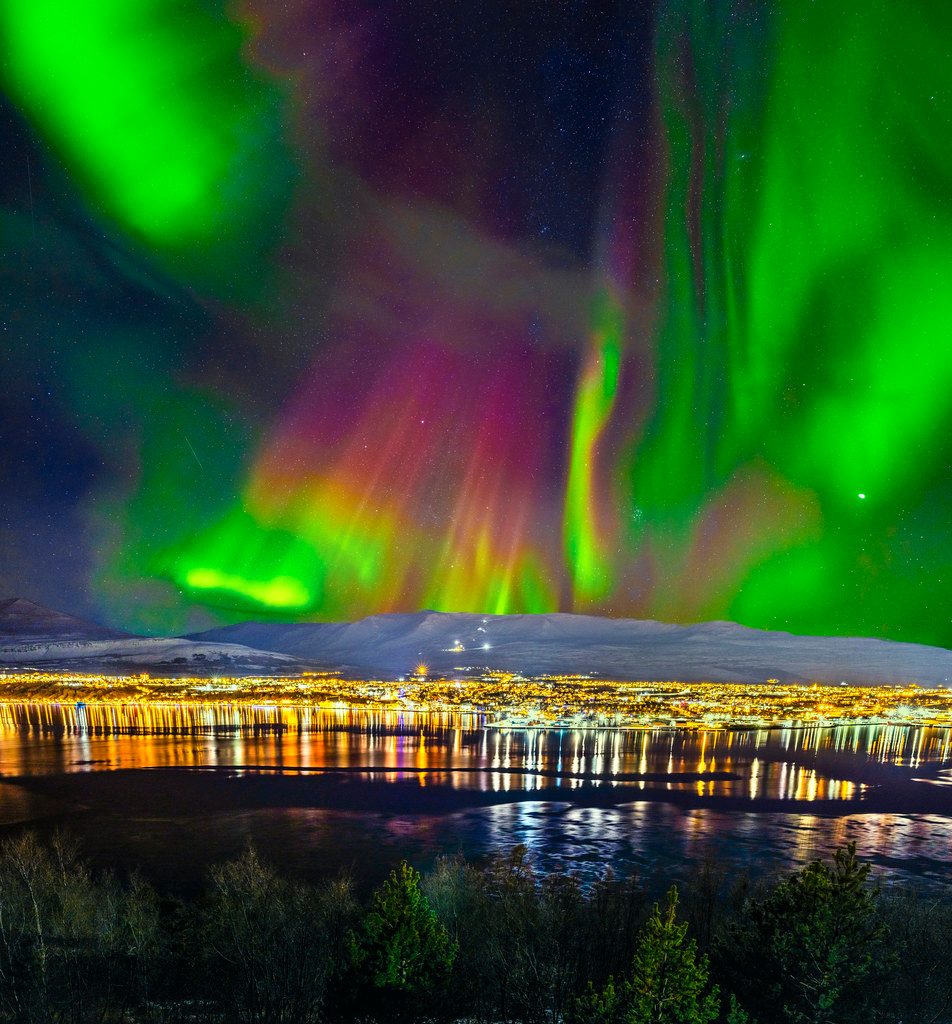
The auroral oval shifts latitude with solar wind pressure, but Akureyri's position at 65°41'N keeps it within striking distance even during moderate geomagnetic activity. A KP index of 2—a common threshold during solar maximum phases—places the aurora directly overhead here, while southern Iceland often requires KP 3 or higher for equivalent visibility. The Icelandic Met Office updates its aurora forecast model every three hours, blending magnetometer readings from Leirvogur with NOAA satellite data and European cloud prediction grids. Cloud cover determines whether a strong geomagnetic storm becomes a visible display or a statistical event hidden behind stratocumulus. The forecast maps layer predicted aurora intensity (green intensity scale) beneath cloud cover percentage (white opacity overlay), creating a composite view that identifies clearings. Coastal low-pressure systems frequently push clouds inland from the west, leaving the Eyjafjörður valley clear while Reykjavík weathers overcast skies. Monitoring the akureyri northern lights forecast three to six hours before your planned viewing window allows you to track these cloud movements and adjust your location accordingly. Geomagnetic storms follow 27-day solar rotation cycles, with coronal mass ejections taking 48 to 72 hours to reach Earth after erupting from the sun's surface. The forecast includes a three-day prediction band showing probable KP index ranges, though accuracy diminishes beyond 24 hours. Substorms—brief intensifications within longer geomagnetic events—create the dancing curtain effects most sought by photographers, but they last only 20 to 40 minutes and appear with little warning. The real-time magnetometer graph on the forecast page shows these surges as sharp upward spikes. Moon phase and urban light pollution both factor into subjective aurora brightness. A full moon reduces contrast for faint green arcs rated KP 1 to 2, though it barely affects the magenta and red bands that emerge during KP 4+ storms. Akureyri's compact downtown produces a moderate light dome visible from the harbor, but a five-minute drive north along Route 82 reaches agricultural darkness where the Milky Way becomes visible on clear moonless nights. The official forecast does not account for local light pollution—you apply that variable by choosing your viewing site based on predicted aurora strength and your tolerance for faint displays versus guaranteed vivid ones.
“A KP index of 2 places the aurora directly overhead in Akureyri, while southern Iceland often requires KP 3 or higher for equivalent visibility.”
Optimal Timing for Akureyri Northern Lights Forecast Monitoring
The prime window for viewing the aurora in Akureyri spans from late August to mid-April, when darkness levels are sufficient for visibility. Within this timeframe, the best arrival window is 22:00–02:00, providing the most consistent opportunities to observe solar activity against dark skies.
Late August to October
Low visitor densityTemperatures 2°C to 10°C; variable conditions. Mild nights offer accessibility before the harshest winter weather arrives.
November to February
Moderate visitor densityTemperatures -5°C to 2°C; frequent cloud cover. Longer nights provide more hours of darkness for potential sightings.
March to Mid-April
Moderate visitor densityTemperatures -2°C to 5°C; increasing daylight. The transition period balances cold temperatures with longer evening viewing opportunities.
Verdict: The most favorable period is between September and March, targeting the arrival window of 22:00–02:00 for optimal darkness.
Entrance Fees and Costs for Akureyri Northern Lights Forecast Viewing
The Northern Lights are a natural phenomenon occurring in the atmosphere above Akureyri. Access to these viewing areas does not require admission tickets or payment.
Essential Preparation for Akureyri Northern Lights Forecast Expeditions
Successful aurora viewing in Akureyri requires specific gear and real-time forecast monitoring.
-
Download aurora forecast apps — Track KP index and cloud cover through Icelandic Met Office or similar services.
-
Pack insulated winter layers and waterproofs — Temperatures drop significantly during night viewing between 22:00–02:00.
-
Bring a tripod and camera with manual settings — Long exposures capture auroras invisible to the naked eye in low light.
-
Charge phone and download offline maps — Cell service weakens outside town; GPS works without data.
-
Wear thermal boots with grip — Snow and ice cover viewing areas throughout winter months.
-
Pack headlamp with red filter — Preserves night vision while checking equipment and moving safely.
Check availability
Frequently asked questions about akureyri northern lights forecast
Everything you need to know about akureyri northern lights forecast